Salim Najjar on What Your HRV Score Is Really Telling You
HRV coach Salim Najjar on reading heart rate variability as your nervous system's language, why you shouldn't compare scores, and the sleep, light and stress habits he uses to support it.
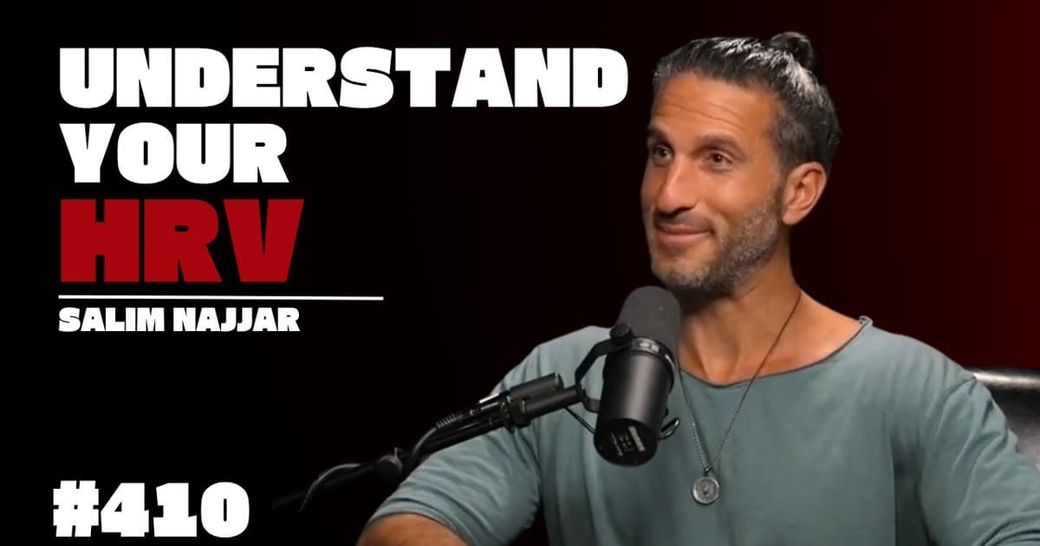
By The Meat Mafia (Harry Gray and Brett Ender)
The first time Salim Najjar came on the show, we had only 45 minutes, and it went by in a blur of HRV talk. So we brought him back to go deeper.
He started by correcting us. We called him an expert, and he said he's a student. If you're living in a human body, he told us, there's always more work to do on regulating your nervous system.
Years of tracking HRV taught him one main lesson:
"the biggest factor is your relationship to the thing" (~02:00)
His point is that two people can have the same stressful day and very different nervous system responses, depending on the story they tell themselves about it.
That's also why he's wary of the way biohackers treat HRV like a leaderboard. He compares it to a language. Nobody argues that English is better than French. A language exists to communicate.
"The entire intent of your HRV score is for your nervous system to communicate with you and your body" (~20:00)
So the score isn't something to compare with your friends. He's seen people with a dysregulated nervous system look at a low number and get stressed, which only makes things worse.
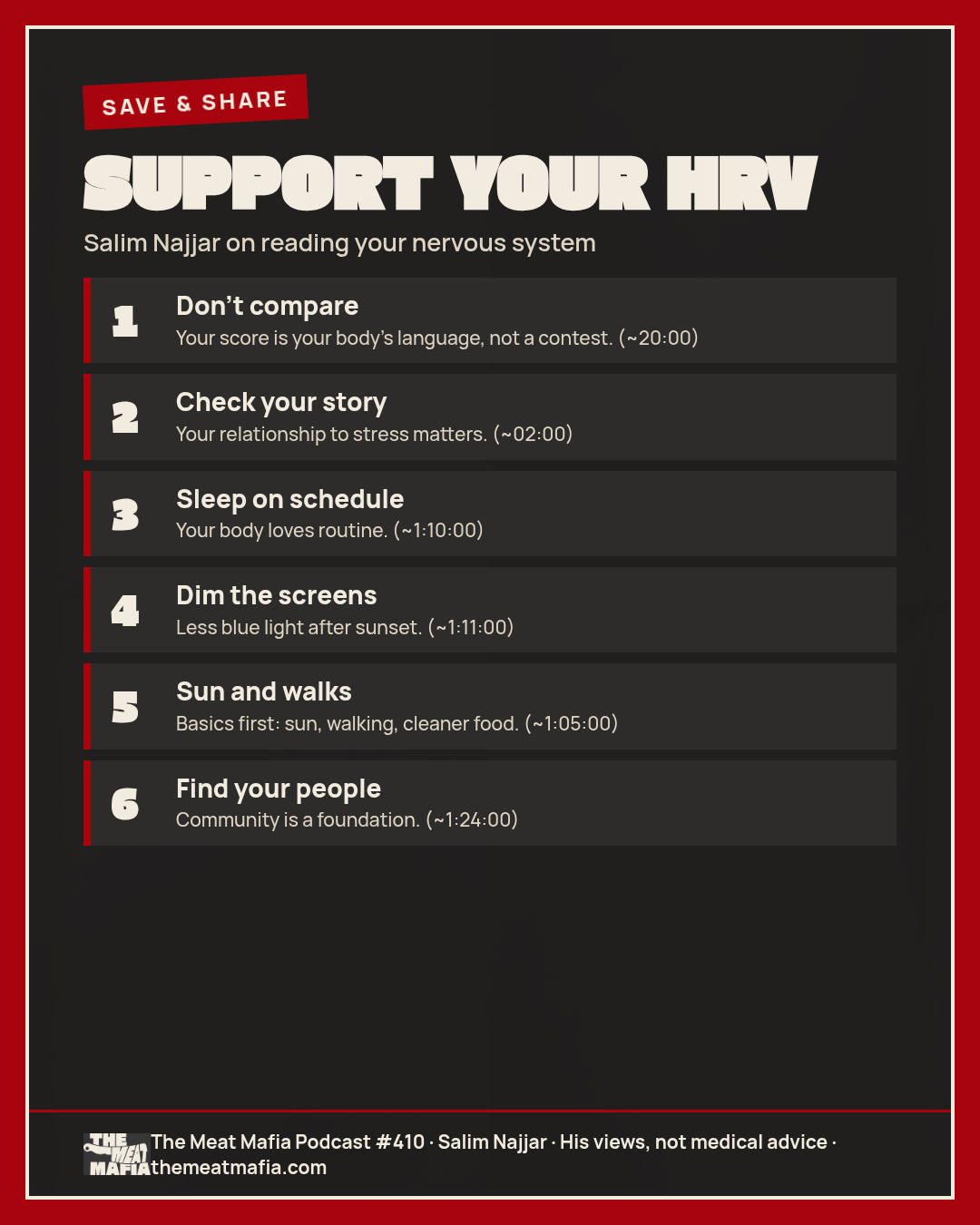
That's the Salim we sat down with: a guy who wants you to use your wearable as a tool instead of letting it control you. Below are his favorite basics for supporting HRV. These are his views, not medical advice. (Timestamps are approximate.)
Listen to the full episode · Watch on YouTube
TL;DR: Salim Najjar sees HRV as a language your nervous system uses to talk to you, which is why he says you shouldn't compare your score to anyone else's. He thinks the biggest lever is your relationship to stress, not just the stressors themselves. The basics he leans on are consistent sleep, less blue light at night, sun, walking, cleaner food and real community. These are his views, not medical advice.
Who is Salim Najjar? A heart rate variability (HRV) coach and educator who teaches people to regulate their nervous systems. He first joined us on episode 313. He calls himself "an everyday student" rather than an expert.
Key takeaways
- Treat HRV as a personal signal, not a number to compare with others (~19:00 to ~20:00).
- He believes your relationship to stress matters as much as the stress itself (~02:00).
- When you're stuck in fight or flight, he says you lose access to creativity and intuition (~35:00).
- For sleep, he focuses on consistency and cutting blue light after sunset (~1:10:00).
- Sun, walking, cleaner food and community are the foundations he returns to (~1:05:00, ~1:24:00).
HRV as a language
Salim describes HRV as your nervous system talking to you through the gap between heartbeats. Because the signal is personal, he thinks comparing scores misses the point. Use it to notice patterns and adjust, not to judge yourself.
Stress and perception
He talks about the difference between the stressed "back brain" and the calmer state where creativity and intuition live. He says that bringing awareness and agency to how you react is where improvement starts, and that his own regulation has made him more sustainably productive.
Sleep, light and community
His simple tools: a consistent sleep schedule, less blue light after sunset so melatonin isn't delayed, more sun, more walking and a cleaner diet. He also points to human connection as a foundation that tech can't replace.
FAQ
Who is Salim Najjar? An HRV coach and educator focused on nervous system regulation. He first appeared on episode 313.
Should I compare my HRV to other people's? Salim says no. He sees HRV as a personal signal from your own nervous system (~20:00).
What habits does he use to support HRV? Consistent sleep, less blue light at night, sun, walking, cleaner food and community (~1:05:00 to ~1:24:00).
Related on The Meat Mafia
- Josh Clemente on Levels and CGMs
- Pete Nelson on sauna and sisu
- More on Labs, Bloodwork & Wearables
- Browse all episodes
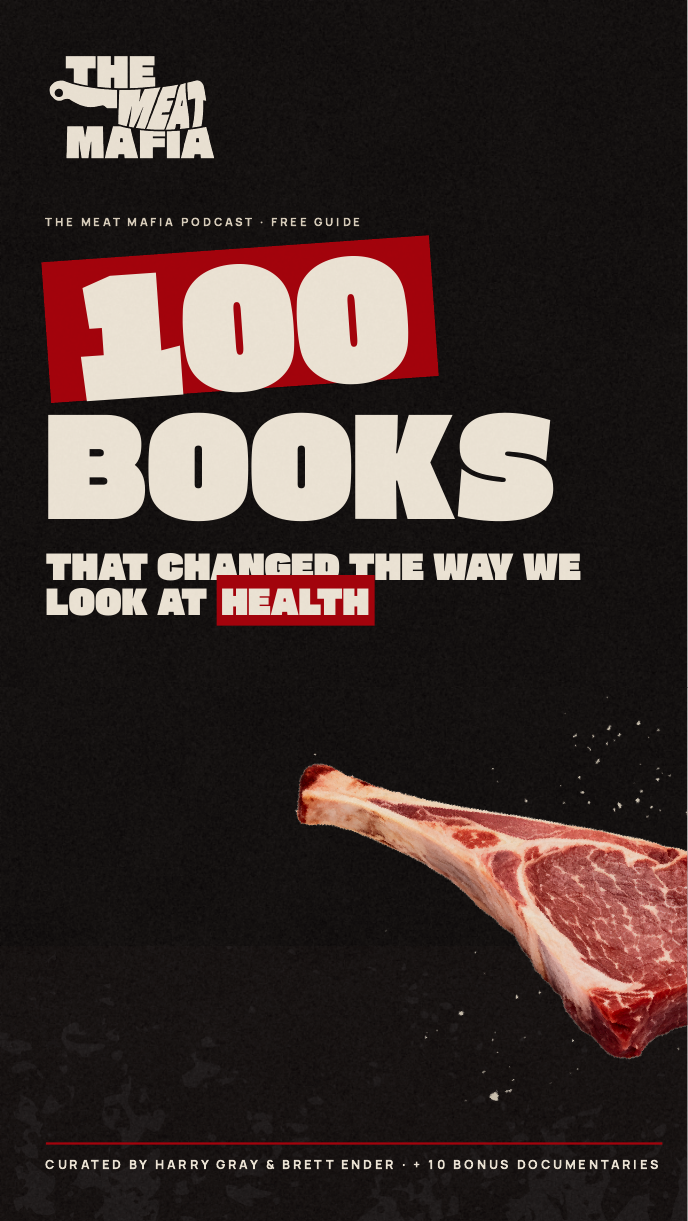
Get the free guide: 100 Books to Transform Your Health. Join the Meat Mafia email list and we'll send it to you.
Not medical advice. This post summarizes a podcast conversation for education. The views are the guest's own. Talk to a qualified clinician before you change your diet, supplements or any medication.