Judy Cho on Food Sanity: Carnivore Without Perfectionism, Emotional Eating and Picking Your Battles
Nutritional therapist Judy Cho, author of Carnivore Cure, on food and mood journaling, emotional eating, avoiding orthorexia, and why the healthiest food is the one you'll actually eat.
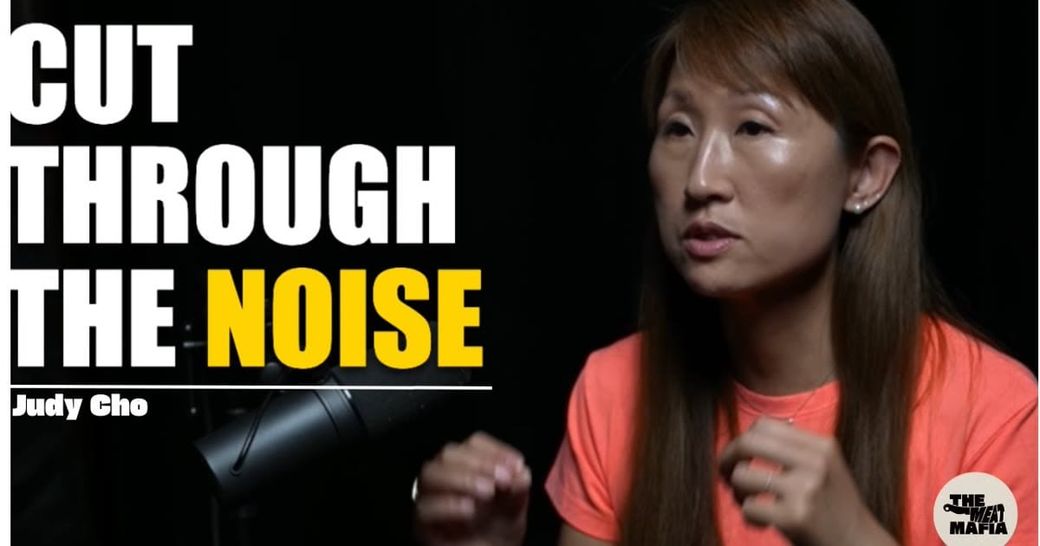
By The Meat Mafia (Harry Gray and Brett Ender)
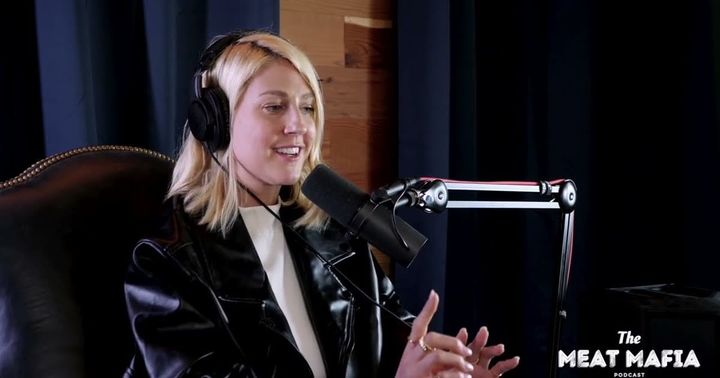
Judy Cho used to label everything in her kids' lunchboxes on social media: grass-finished, pasture-raised, organic.
Then she stopped. She'd lived with a severe eating disorder for years, and she didn't want her posts to send the message that you only get better if you buy the best.
"I do not want to make people orthorexic" (~36:00)
She says she sees it in her practice: people trying to get the right information and ending up anxious about every label. Now she just writes egg, steak, beef.
That struck a chord with us. Brett pointed out that when he was 24 and new to all this in New York, he didn't know a rancher. He bought budget cuts from the grocery store and still turned his health around.
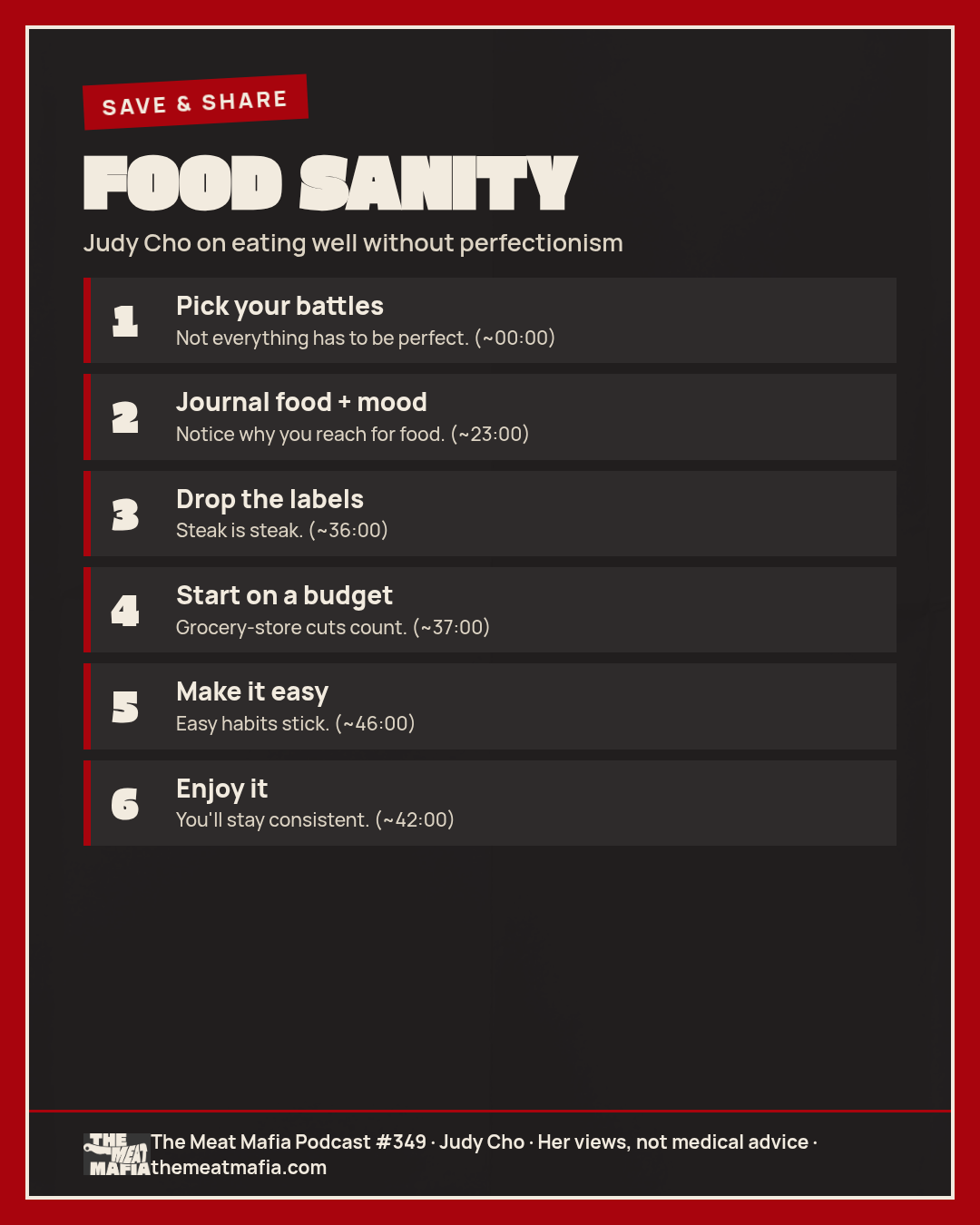
Judy's rule for food is practical. She uses a food and mood journal to notice the moments you turn to food for comfort, like reaching for a snack every time you sit down in front of the TV. And she'd rather someone eat a good food they actually enjoy than skip a "perfect" one:
"if a person will not eat the healthiest thing, then there's no point in it" (~46:00)
That's food sanity: pick your battles, stay consistent and give yourself grace. These are her views and our experiences, not medical advice. (Timestamps are approximate.)
Listen to the full episode · Watch on YouTube
TL;DR: Judy Cho supports a carnivore diet as an elimination tool, but she warns against perfectionism. She suggests a food and mood journal for noticing why you reach for food. She no longer labels every item in her kids' lunchboxes as grass-finished or pasture-raised, because she doesn't want to feed orthorexia. And she says consistency beats a perfect plan nobody can stick to. These are her views, not medical advice.
Who is Judy Cho? A nutritional therapy practitioner and author of Carnivore Cure. She draws on her own recovery from an eating disorder.
Key takeaways
- She uses carnivore as an elimination diet, not a purity test (~00:00).
- A food and mood journal helps you spot emotional eating (~23:00).
- She stopped labeling every food's sourcing to avoid feeding orthorexia (~36:00).
- You don't need premium meat to start: Brett began with budget cuts (~37:00).
- Consistency beats perfection. Make healthy choices easy (~46:00).
- Variety, from seafood to beef, helps, but enjoyment keeps you consistent (~42:00).
Food and mood
Judy suggests writing down not just what you eat but how you feel. The goal is to notice patterns, like stress or boredom leading to food. Brett shares his own journal: meal timing, sleep, energy on a one-to-four scale and bowel movements.
Against orthorexia
After her own eating disorder, Judy is careful not to make food feel like a perfection contest. Occasional imperfect foods, she says, are fine for her family.
Make it easy
She shares a lesson from a business owner: if you want people to change a habit, make it as easy as possible.
FAQ
Who is Judy Cho? A nutritional therapy practitioner and author of Carnivore Cure.
What is a food and mood journal? A log of what you eat and how you feel, used to spot emotional eating (~23:00).
Do you need grass-finished meat? Judy doesn't want people to think so. Any real food is a start (~36:00).
Related on The Meat Mafia
- Dane Johnson on keeping it simple
- Ben Azadi on metabolic freedom
- More on Carnivore & Animal-Based
- Browse all episodes
Get the free guide: 100 Books to Transform Your Health. Join the Meat Mafia email list and we'll send it to you.
Not medical advice. This post summarizes a podcast conversation for education. The views are the guest's own. Talk to a qualified clinician before you change your diet, supplements or any medication.