Dr. Leigh Erin Connealy: Why Self-Care Is the New Healthcare
Integrative physician Dr. Leigh Erin Connealy on why daily habits add up, why she asks every patient about sleep, water, food, movement and stress, and why we shouldn't wait for a diagnosis to value our health.
By The Meat Mafia (Harry Gray and Brett Ender)
Dr. Leigh Erin Connealy has a question she asks every new patient at her cancer center: what was the first thing you did to change the course of your life?
She told us the most common answer is that they changed what they ate. The catch is that these were people who had just been diagnosed.
"self care is the new healthcare" (~01:00)
In other words, many of them already knew something needed to change. It took a frightening moment, like a diagnosis, heart attack or stroke, to get them to act.
That's what she wants to change. Her core belief is simple, and she opened our conversation with it:
"The only thing that changed was their diagnosis" (~1:23:00)
She means it broadly. In her view, your life is an accumulation of events: physical, psychological, emotional and spiritual. They all add up to the person you are, and she thinks educating mothers-to-be about that would make a big difference for the next generation.
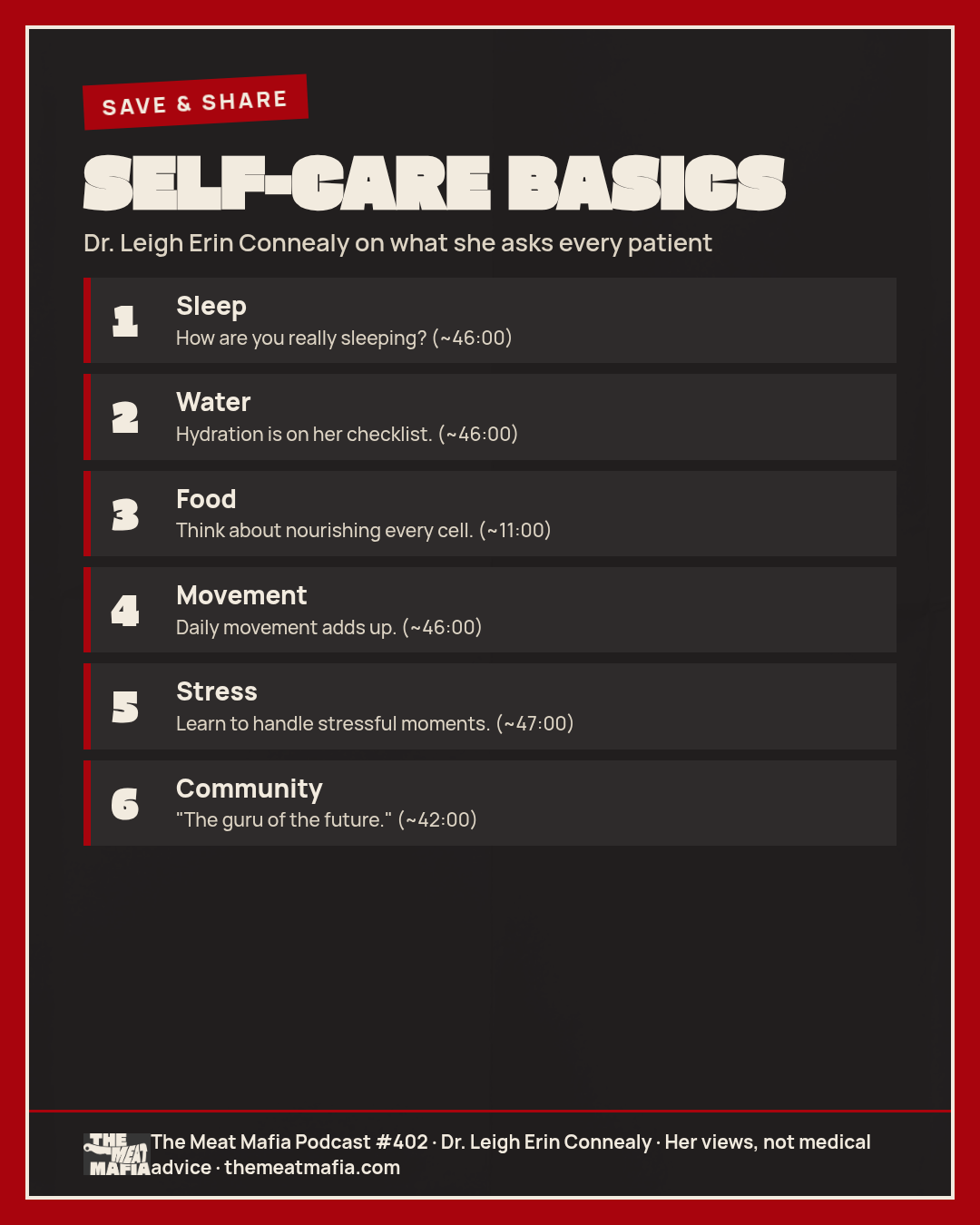
She also pointed out that the word doctor means to teach. So when she sees a patient, she doesn't stop at the physical. She asks about sleep, water, food, movement and stress, because, as she puts it, everything plays a part.
That's the Dr. Connealy we sat down with in Austin: a physician who sees herself as a partner in her patients' care and thinks community may be "the guru of the future." The rest is below. This is her perspective, not medical advice; work with your own doctor on any diagnosis or treatment. (Timestamps are approximate.)
TL;DR: Dr. Leigh Erin Connealy says self-care is the new healthcare. Your life is an accumulation of what you do every day, physically, emotionally and spiritually. She asks every patient about their sleep, water, food, movement and stress. She values emergency medicine but says a pill is only part of the answer. Her biggest wish is that people would value their health before a diagnosis forces them to. These are her views, not medical advice.
Who is Dr. Leigh Erin Connealy? An integrative medical doctor who runs a cancer center and a wellness practice. She says she sees her role as a partner in her patients' care.
Key takeaways
- Don't wait for a scare to start valuing your health (~1:23:00).
- Your life is an accumulation of daily events, and they all add up (~01:00).
- She asks every patient about sleep, water, food, movement and stress (~46:00).
- She praises emergency medicine but says a pill alone is only part of the answer (~1:06:00 to ~1:07:00).
- Community and connection matter. She calls community "the guru of the future" (~42:00).
Self-care is the new healthcare
Dr. Connealy believes there's a lot you can do yourself, starting with food. Her example: if you think mac and cheese or an Oreo is going to nourish your cells, it probably isn't. That doesn't mean never, she says, but think about nourishing every cell.
What she asks every patient
She describes a whole-person intake: sleep, water, eating, movement and stress, plus the emotional and spiritual side. She sees all of it as connected and believes doctors should teach patients how to take care of themselves, not just hand over a prescription.
Where conventional care shines
She's clear that emergency medicine in the U.S. is excellent and that some situations call for medication. Her point is that a pill is part of the answer, and that we should also look at causes and daily habits. Any treatment decisions belong with your own doctor.
FAQ
Who is Dr. Leigh Erin Connealy? An integrative medical doctor who runs a cancer center and a wellness practice.
What does she mean by self-care is the new healthcare? That daily habits around food, sleep, movement, stress and connection add up, and there's a lot you can do yourself (~01:00).
Is she against conventional medicine? No. She praises emergency medicine and says medication has its place. She also wants doctors to look at causes and habits (~1:06:00 to ~1:07:00). This is not medical advice.
Related on The Meat Mafia
- Dr. Isaac Jones on root-cause care
- Dr. Marty Makary on medical blind spots
- More on Root-Cause Medicine
- Browse all episodes
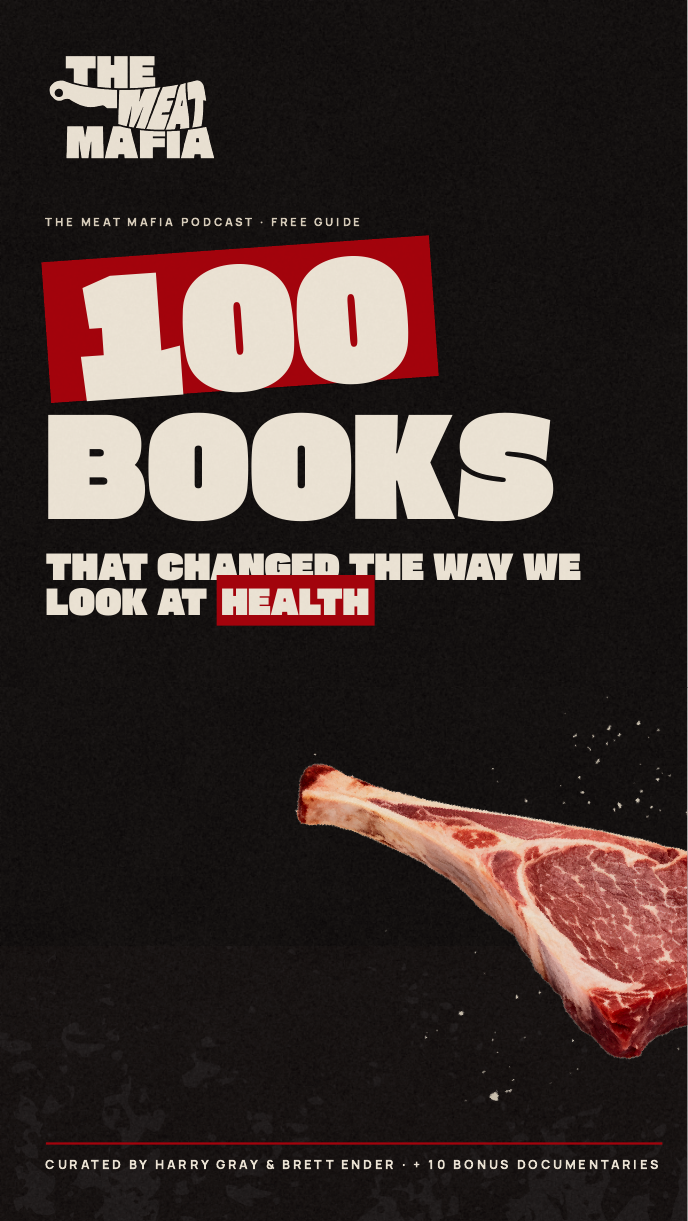
Get the free guide: 100 Books to Transform Your Health. Join the Meat Mafia email list and we'll send it to you.
Not medical advice. This post summarizes a podcast conversation for education. The views are the guest's own. Talk to a qualified clinician before you change your diet, supplements or any medication.