Longevity & Frontier Therapies
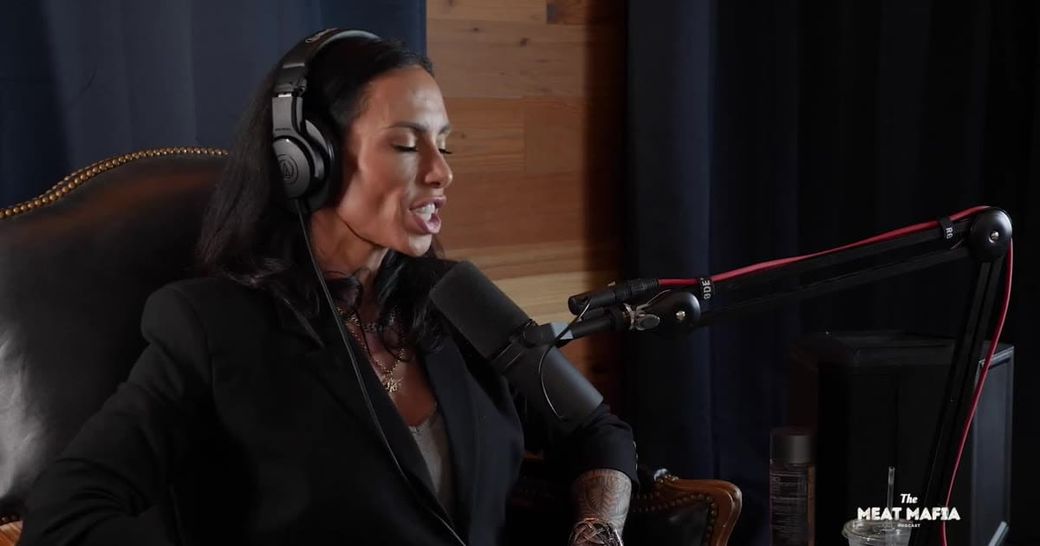
Dr. Gabrielle Lyon on Muscle-Centric Medicine and Longevity
Dr. Gabrielle Lyon explains how a patient's brain scan led her to muscle-centric medicine, and why she calls skeletal muscle the organ of longevity.
By The Meat Mafia (Harry Gray and Brett Ender)
Dr. Gabrielle Lyon's path into medicine didn't start with a health crisis of her own. It started at 17, on Hawaii, sitting in on patient visits in exchange for room and board.
She had graduated high school in three and a half years and moved in with her godmother, Elizabeth Lipsky, whom she calls one of the OGs of functional medicine. She watched nutrition change people's lives, and she decided then that nutrition was the way of the future.
She went on to study nutritional sciences at the University of Illinois, then medical school. She told us she hated medical school and the way the information was taught, and that she once debated not going to residency at all. She went anyway: two years of psychiatry, three years of family medicine in New York, then a fellowship at WashU in St. Louis.
Geriatrics was the part of that fellowship she didn't want. She says it was the price of funding her nutrition training. But it put her at the bedside of patients near the end of life, and she says that image never leaves you.
Then came a research participant: a mom of three in her mid-fifties who had struggled with the last 20 pounds for 20 years. The team imaged her brain, and Dr. Lyon says it looked like the beginning of an Alzheimer's brain. She says she felt responsible, because the standard advice of eating less and exercising more had led to years of yo-yo dieting.
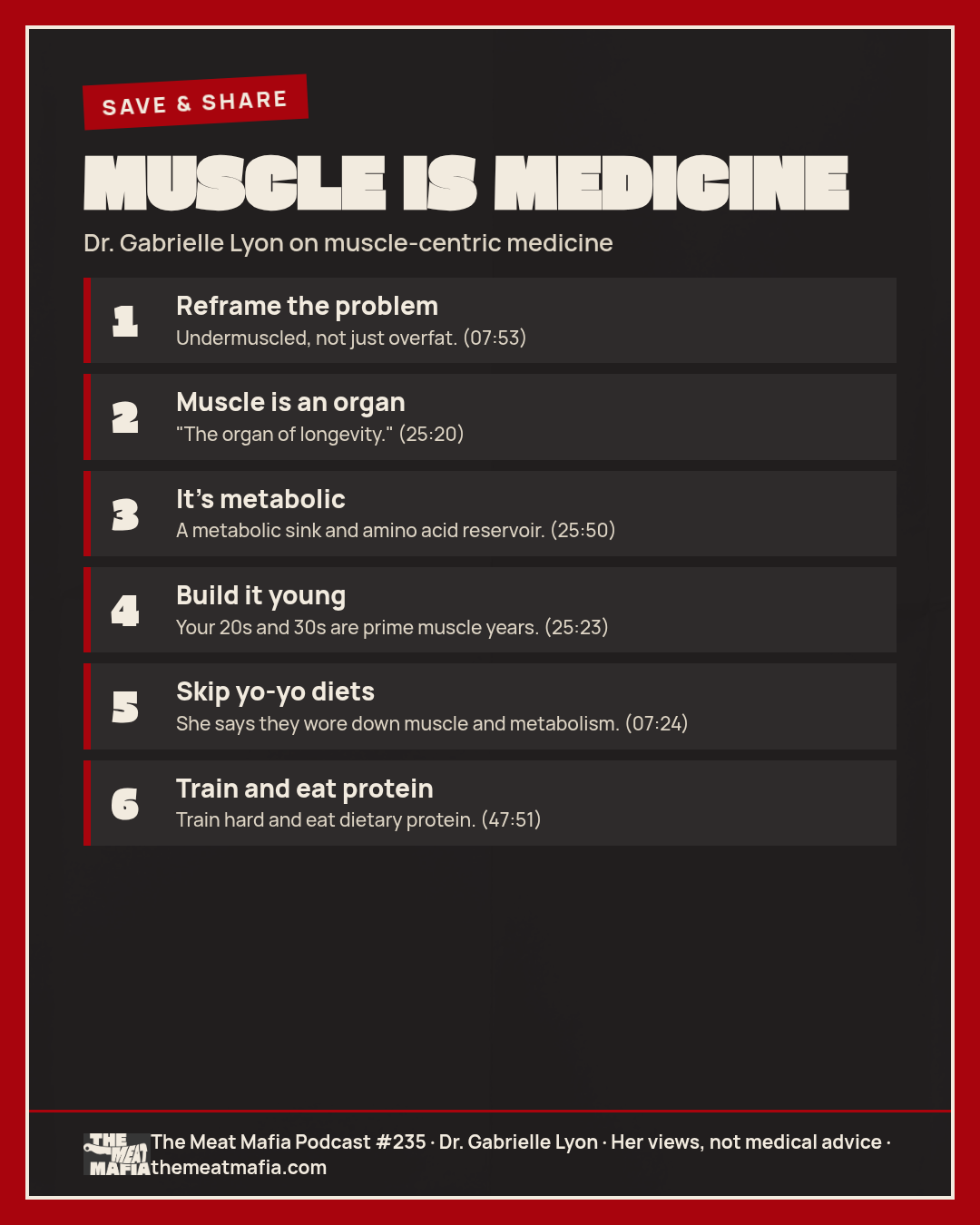
"It wasn't fat as the issue. It was this idea that they were all undermuscled or had unhealthy skeletal muscle." (07:53)
That was the start of what she calls muscle-centric medicine: treating skeletal muscle not as a fitness goal but as a medical one. In her words, it's a metabolic organ, an amino acid reservoir and a source of signaling molecules called myokines.
"Muscle is the organ of longevity." (25:20)
That's the Gabrielle Lyon we sat down with: a physician who wants muscle treated as part of medicine, not vanity. Below is the rest of the conversation, from muscle as a metabolic organ to her book Forever Strong. This is her view, not medical advice. Talk to your own clinician before you change your diet or training.
Listen to the full episode · Watch on YouTube
TL;DR: Dr. Gabrielle Lyon says the people she worried about most weren't defined by excess fat but by too little healthy skeletal muscle. She calls muscle "the organ of longevity" and a metabolic organ, and argues for training hard and eating enough dietary protein. Her views, not medical advice.
Who is Dr. Gabrielle Lyon? A physician who trained in psychiatry and family medicine, did a fellowship in nutritional sciences, obesity medicine and geriatrics at WashU in St. Louis, and wrote Forever Strong.
Key takeaways
- She calls Western medicine largely a symptom-treating approach (04:38).
- She says her patients' common thread was being undermuscled, not overfat (07:53).
- She calls skeletal muscle the organ of longevity and a metabolic organ (25:20).
- Her short version: train hard and eat dietary protein (47:51).
Why muscle, not fat
Dr. Lyon says the general advice to cut calories and exercise more led the patient she describes into yo-yo dieting that, by her account, wore down her muscle and metabolism (07:19). Her reframe is to focus on building and keeping healthy skeletal muscle.
Muscle as an organ
She describes skeletal muscle as a metabolic sink, an amino acid reservoir and a site of myokine production (25:45). She says your 20s and 30s are your prime muscle-building years.
Her prescription
She calls the problem "a midlife muscle crisis" and says the answer is to train hard and eat dietary protein (47:41). Her book is Forever Strong.
FAQ
What is muscle-centric medicine? Dr. Lyon's approach of treating skeletal muscle as a medical priority, not just a fitness goal (08:00).
Why does Dr. Lyon call muscle the organ of longevity? She describes it as a metabolic organ, an amino acid reservoir and a source of myokines that interface with the rest of the body (25:20).
What does Dr. Gabrielle Lyon recommend? On the episode she says to train hard and eat dietary protein (47:51). Talk to your own clinician about what fits you.
Related on The Meat Mafia
- Dr. Ken Berry's proper human diet
- Dr. Marty Makary on medicine's blind spots
- More on Longevity & Frontier Therapies
- Browse all episodes
Get the free guide: 100 Books to Transform Your Health. Join the Meat Mafia email list and we'll send it to you.
Not medical advice. This post summarizes a podcast conversation for education. The views are the guest's own. Talk to a qualified clinician before you change your diet, supplements or any medication.