Dr. Phil Ovadia: A Heart Surgeon's Five Numbers for Metabolic Health
Heart surgeon Dr. Phil Ovadia explains the five metabolic health measures he tracks, why he links heart disease to metabolic health, and how losing over 100 pounds changed his career.

By The Meat Mafia (Harry Gray and Brett Ender)
Dr. Phil Ovadia was one of our earliest guests, back when the podcast was still finding its feet. His book title, Stay Off My Operating Table, says it all, and his own story is why he wrote it.
For most of his career he was a heart surgeon who was steadily gaining weight. By his account, about six or seven years before we talked, he was morbidly obese and pre-diabetic. He had tried many times to lose weight. He counted calories. Nothing stuck.
Then he cut sugar and went low carb, which turned into a more traditional keto diet. He says he lost over 100 pounds. Later he heard an orthopedic surgeon, Shawn Baker, talk about the carnivore diet on Joe Rogan's show. It sounded crazy to him at first. He tried it anyway.
Three and a half years later, he told us, he was in the best shape of his life: wearing smaller clothes than in high school, with more muscle than he'd ever had.
The bigger change was in how he saw his own work. The disease he had been operating on his whole career, he says, wasn't what he'd been taught.
"I came to realize the truth about heart disease and that it is an end a product of metabolic disease." (06:47)
So he refocused. He still works as a heart surgeon, but he also works with people one-on-one, often by telemedicine, to help them stay off his operating table. His starting point isn't the number most doctors focus on. It's five simple measures anyone can track.
What moves him most now is the next generation. When parents change, he says, kids notice.
"my children they look back at the pictures from 10 years ago and they talk about how Daddy used to be" (34:10)
That's the Phil Ovadia we sat down with: a surgeon who'd happily run out of surgeries to do. Below is the rest of the conversation, from his five numbers to medications and the case for preventive care. This is his view, not medical advice. Talk to your own clinician about your numbers.
Listen to the full episode · Watch on YouTube
TL;DR: Heart surgeon Dr. Phil Ovadia says he was morbidly obese and pre-diabetic before a low-carb, then carnivore, diet helped him lose over 100 pounds. That journey changed how he sees heart disease: as an end product of metabolic disease. He tracks five simple measures (waist, blood pressure, fasting glucose, HDL and triglycerides) and says diet is "probably 90 to 95 percent of it."
Who is Dr. Phil Ovadia? A practicing heart surgeon and the author of Stay Off My Operating Table. Alongside surgery, he works with people one-on-one on metabolic health, including by telemedicine.
Key takeaways
- He says he lost over 100 pounds on low carb, then keto, then carnivore (05:11).
- He calls heart disease an end product of metabolic disease (06:47).
- He tracks five measures: waist, blood pressure, fasting glucose, HDL and triglycerides (10:43).
- He says diet is "probably 90 to 95 percent of it," with sleep, stress and sunlight also important (17:44).
- He sometimes recommends cholesterol medication but usually starts with metabolic health (23:23).
The five measures he tracks
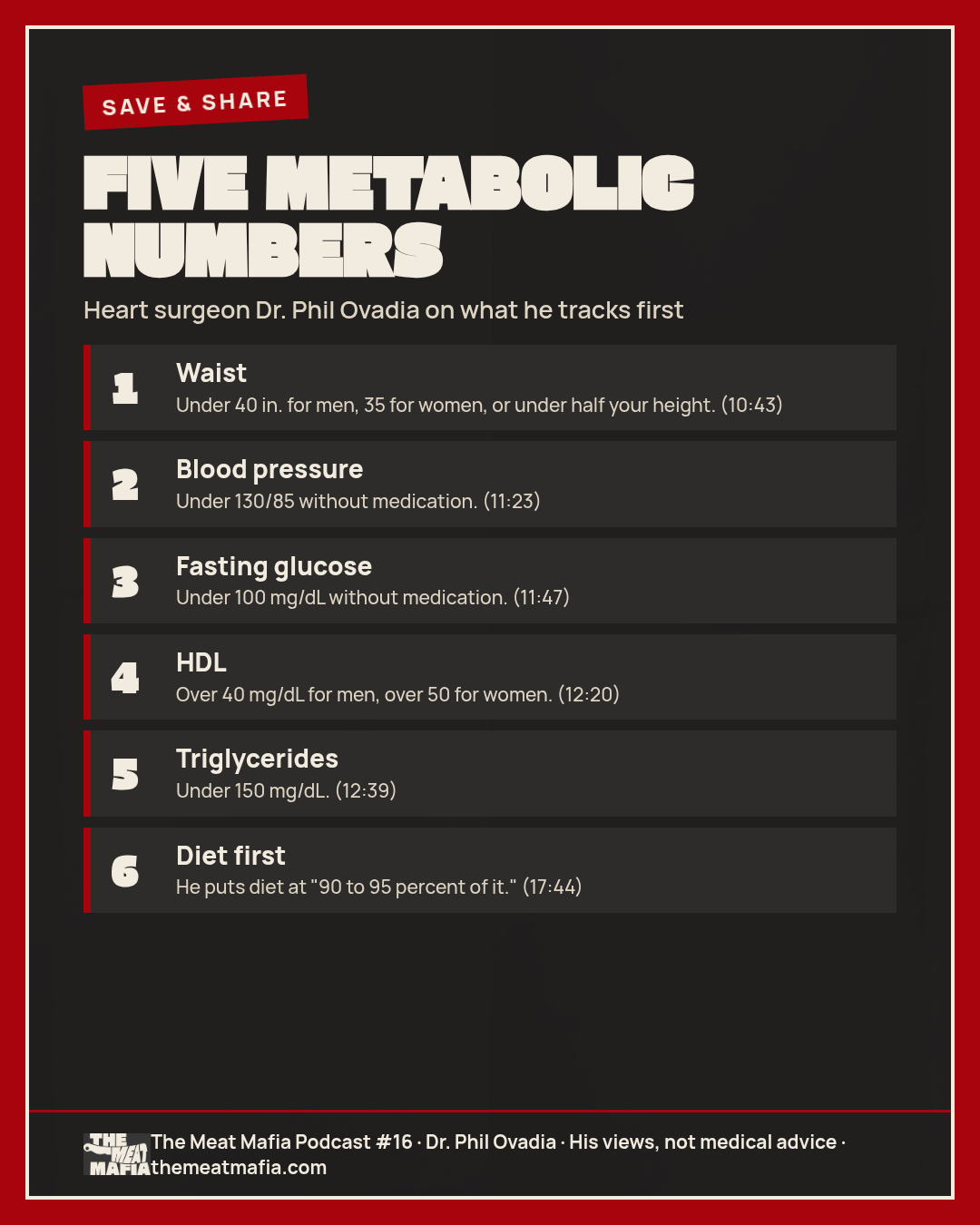
Phil's targets, as he lays them out: waist under 40 inches for men and 35 for women (or under half your height), blood pressure under 130/85 without medication, fasting glucose under 100 mg/dL, HDL over 40 for men and over 50 for women, and triglycerides under 150 mg/dL (10:43–12:29). He notes that LDL, the number most doctors focus on, isn't on his metabolic list.
Diet first
He says you can get metabolically healthy without exercising a whole lot, and puts diet at "probably 90 to 95 percent of it" (17:44). Sleep, stress and sunlight still matter, by his account.
Where medication fits
He's not against medication. He says he sometimes recommends cholesterol-lowering drugs, "But in the vast majority of cases, what I tell people is let's fix your metabolic health" first (23:23). He sees blood pressure and diabetes medication the same way.
FAQ
Who is Dr. Phil Ovadia? A heart surgeon and author of Stay Off My Operating Table who also coaches people on metabolic health.
What five measures does Dr. Ovadia use for metabolic health? Waist circumference, blood pressure, fasting blood glucose, HDL cholesterol and triglycerides (10:43).
How much weight did Dr. Ovadia lose? He says over 100 pounds, first on low carb and keto, later on a carnivore diet (05:11).
Does Dr. Ovadia think diet or exercise matters more? He says diet is probably 90 to 95 percent of it, with sleep, stress and sunlight also important (17:44).
Related on The Meat Mafia
- Dr. Ken Berry's proper human diet
- Dr. Marty Makary on medicine's blind spots
- More on Metabolic Health
- Browse all episodes
Get the free guide: 100 Books to Transform Your Health. Join the Meat Mafia email list and we'll send it to you.
Not medical advice. This post summarizes a podcast conversation for education. The views are the guest's own. Talk to a qualified clinician before you change your diet, supplements or any medication.